28 June 2023
Mihael Grilec: A marathon mindset with a passion for video games
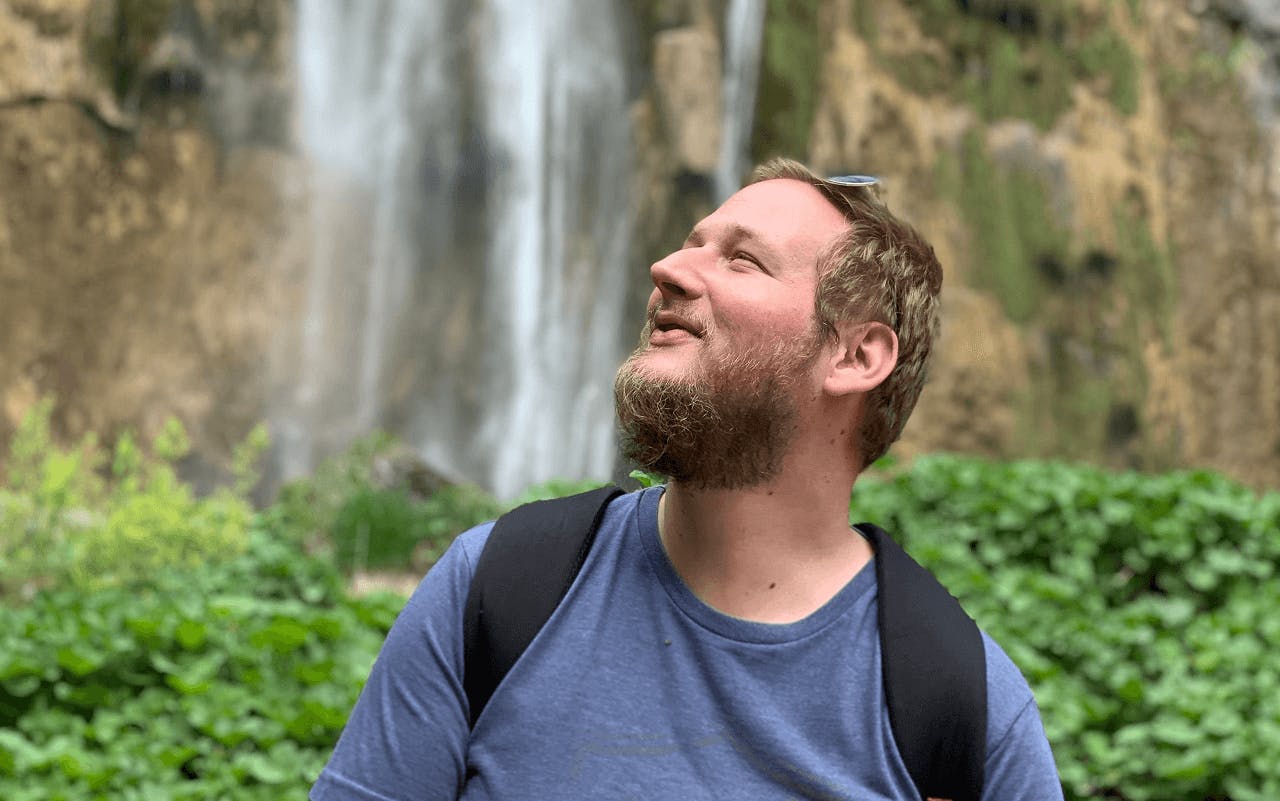
How many roles can one play? For a gamer at heart, a new role is just a new challenge.
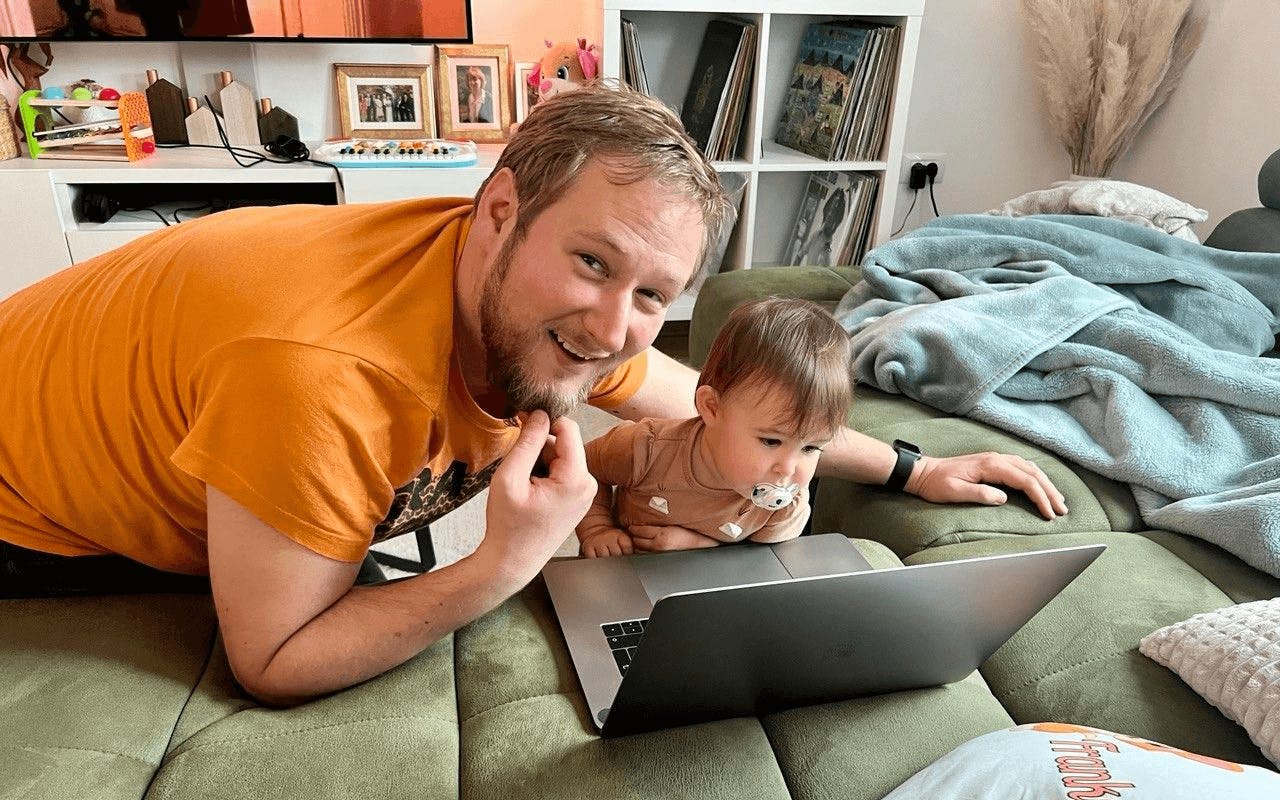
Mihael is a System Architect and a member of the team since the very beginning! He was directly or indirectly involved in the development of all products, building most of the front-end of the initial versions of INSiDE, from which it all started. He is great at mentoring and loves getting involved in creating onboarding materials for new colleagues. As a dad of little Franka, and with the second child on the way, he is now more dedicated to the family. But as a gamer at heart, he always nurtures that passion for games that got him into programming. And although born in Zagreb, he became a "Varaždinec" – just another role to play.
"I worked remotely until a year ago. Then I became a dad and everything changed. I decided to move to Varaždin. It was not an easy task - to persuade my wife to come with me, but over time she fell in love with Varaždin and everything turned out well."
How Amiga computer captured the imagination of a 3-year-old
The first thing you will notice when you talk to Mihael is his warm and cheerful nature. He told us his story of being a technology enthusiast from an early age and the moment that marked his life path.
- I think my life was defined by the moment when my father brought me an Amiga computer from Germany. I was 3 years old. From a very young age, I knew I would do programming. Surely, I had not considered app and web development. My youthful dream was to develop games. When I joined the company, I was already good at it. Later on, of course, we started developing applications for Emil Frey, which was much easier for me than developing games where you need to know math and all sorts of things, he said.
During his studies at the Faculty of Electrical Engineering and Computing in Zagreb, he was involved in and led numerous projects, inside and outside the university. For example, he worked for Ericsson Nikola Tesla on virtual reality (VR) development projects, facial recognition and such, which is quite close to game development, so he found himself a lot in that. During that time, he had the opportunity to work on projects for the automotive industry as well. Not in the same way as they do at EFD, where their solutions mainly help with vehicle distribution. There, more work was done with vehicle manufacturers on, e.g. fatigue detection systems and the like. That is how he gained experience in the automotive industry even before joining EFD.
He met Nikola Novakovic during his student days, while they worked in the same company. When Nikola started his own company that later grew into EFD, knowing his values and talent, he invited Mihael to join.
- Just by the fact that I have been with the company from the very beginning, even before it became part of the Swiss Emil Frey group, and that we started from scratch in everything we did, and that I had a say in it, ties me to the company to this day, Mihael said.
Small team for big things: From startup to Emil Frey Group
Mihael recalls that in the beginning, they were a very small team that had to cover quite a wide range of things. - We were just one team jumping from domain to domain, depending on the need. We developed different applications for each brand separately. From the very beginning, my role at EFD was more related to the front-end; I worked on the development of the interface and the way the app is integrated into various websites. Later came the need to bring everything together. That is when INSiDE reached a higher level with the overall change in technology and the way we were doing things. That kind of multibrand and unified approach, was super-interesting. Slowly, different teams gathered around different domains. Today we can work on all of them in parallel.
However, that brought along new challenges, Mihael explains.
- Not only in terms of people, but in the technical aspect where INSiDE must be a hub for all activities that an Emil Frey employee has. It has come a long way from a simple application for vehicle configuration to the current set and tools that a dealership needs for complete vehicle sales, servicing, ordering, and customer care, he said.
The whole nine yards for a reason
On his journey to the position he is in today, he did not skip a single step. - I went through the entire development journey: from a developer who in the early days worked 12 or more hours a day to create some of the first applications, through team lead when we hired enough people to form real teams, to the position of system architect where I am today. I think I was in a unique position because I experienced all those roles. I know what their problems are and how to help them in doing their work. I think I am still mostly concerned with that today: how to make it easier for developers to deliver the highest quality code and to implement it as quickly and without major problems as possible.
- I read a lot of what developers write, I offer comments and advice on how to improve it, he continues to explain. Besides, I take care of a lot of other things that a development company needs. We have to be up-to-date with new technologies, and that is a job that never ends. When something new comes to the market, we have to evaluate it, see how it fits into our processes, into our array of technologies. Many times we will implement it, i.e. replace existing solutions with better ones. This is basic hygiene for a development company. After all, developers also want to work with new technologies. It is easier to hire new people when your system is not eight years old and when you can see that someone is taking care of it altogether. On top of that, we are developing a lot of internal tools, we document a lot, create new procedures and standards. We generally make it easier for developers to find their place and encourage them to have ownership of the code, he concluded.
"My typical work day? Lots of code reading, offering comments and advice on how to improve it. Besides, I take care of a lot of other things that a development company needs."
Many times, I cannot get the job done without the input of all teams
In terms of general picture, Mihael explains the team and the process. - In the team, our domains are quite different: I am a front-end person, Strelec is more for back-end, Kiki is for databases. In this, for example, we differ from more connected development teams. In general, we have a lot of work to do in our domains, but we always have to communicate and look for solutions together at touch points. We work a lot with all teams because the things we do apply more or less to all teams. Often I cannot get the job done without the input of all teams. This is very important (and there lies a good part of the work) that all teams agree on something and that what is best for everyone is actually implemented.
He is quite often in the role of a mentor, involved in forming a new team, i.e. in laying the foundations and onboarding of newcomers. Sometimes directly as a mentor, and sometimes indirectly, working on documentation that facilitates newcomers in quickly learning the company culture and becoming productive as soon as possible.
EFD: A team like no other
-There is no better team than the team at EFD, he said of the atmosphere in the company. Such a set of people is rare to find. We hang out a lot at work and outside of work. I think that Nikola contributes a lot to such a healthy and positive atmosphere and company culture that is constantly evolving, as well as the rest of the management. We have come a long way. I think we have really good people who want to be the best at what they do, Mihael said.
"I think the company has really good people who want to be the best at what they do."
Why is it important to have people who are friendly and approachable, and why does he consider that to be the most important part of a company's culture? - Because you always have someone who can help you when you need it. People often ask me things when they do not understand how to implement something or how to implement it at a level where everyone benefits from it. I am often the first person they talk to. As the greatest values, I would single out humanity in work, accessibility and the way in which we can be more productive together and make it an even better place to work for all of us.
"I remember our first trips to Switzerland. We were always running late to planes, to meetings. It was always such a rush to get somewhere! No matter how much we prepared, someone always had to go back for something they forgot. We would always arrive at the last minute, but we were never late."
A marathon mindset with beautiful family duties
Change of priorities is evident – and not just in business terms. - In my younger days, I was a much bigger gamer than I am today, primarily due to lack of time and other life priorities. However, I still follow all this quite actively. And if I have some free time, then I relax and turn on some game that I have been waiting for a long, long time to play. I like it.
Still, the experience gained allows him to see ahead what needs more attention. - I used to work a lot from home, priorities were different. Now I work much more with teams on a daily basis, and according to my feeling, it is much better when working in the office. I think there is no substitute when we seriously need to agree on something, but when we sit down together and talk face to face.
What is next? - The position of a Systems Architect is not a race to be finished as quickly as possible; it is more of a marathon. I see that there is a lot of work here, and there is much ahead of us. I believe I will remain in this position for at least some time until they find a way I can contribute better. I like where I am now, and I think I can make the greatest impact here, he concluded.